
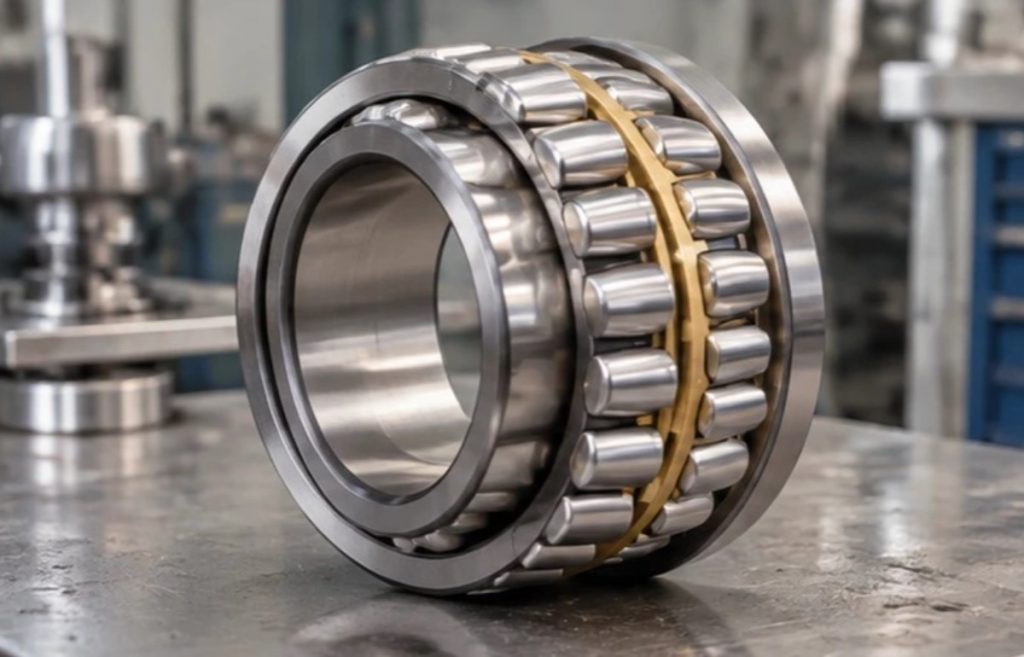
Heavy industrial environments place demanding requirements on every mechanical component. Manufacturing plants, mining facilities, steel mills, cement factories, and power generation stations rely on machinery that must operate under heavy loads, continuous vibration, high temperatures, and challenging working conditions. Even a minor component failure can interrupt production, increase maintenance expenses, and affect overall operational efficiency. Bearings play a central role in keeping rotating equipment stable, reducing friction, and supporting reliable machine performance. Choosing the right heavy industry bearings is therefore an important decision for industrial operators seeking long service life and consistent productivity. Understanding bearing types, operating conditions, and selection criteria helps businesses make better technical decisions, including when considering ball bearings.
Why Bearings Are Essential in Heavy Industry
Bearings are designed to support rotating or moving components while reducing friction between contacting surfaces. In industrial machinery, they help shafts rotate smoothly, maintain alignment, and transfer loads without unnecessary resistance.
Heavy industrial equipment often operates for extended periods under conditions that place considerable stress on mechanical components. Conveyors transport large quantities of raw materials, crushers process hard rocks, rolling mills shape metal under extreme pressure, and industrial fans move substantial volumes of air. Each application requires a bearing capable of handling its particular combination of forces, speeds, and environmental conditions.
The importance of heavy industry bearings becomes clearer when their role in equipment reliability is considered. A properly selected bearing reduces mechanical losses and helps prevent excessive heat generation. It also supports stable shaft movement, limits unwanted vibration, and contributes to the accuracy of connected components.
Bearing performance affects more than the individual machine. In production facilities where multiple machines operate as part of a connected process, an unexpected failure can interrupt several stages of production. Reliable bearing selection and maintenance are therefore essential parts of an effective industrial maintenance strategy.
Common Challenges in Heavy Industrial Environments
Industrial bearings rarely operate in ideal conditions. Their performance depends on the environment, the quality of installation, lubrication practices, and the loads applied during operation.
Heavy radial and axial loads
Large industrial machines frequently carry substantial loads. Crushers, presses, conveyors, and rolling equipment may expose bearings to significant radial forces, axial forces, or a combination of both. If a bearing is not designed for the actual load conditions, excessive stress can lead to premature wear, deformation, or failure.
High operating temperatures
Heat is another major challenge. Furnaces, steel production equipment, industrial ovens, and certain processing machines can generate high ambient temperatures. Excessive bearing temperature may reduce lubricant effectiveness, change internal clearances, and accelerate material fatigue.
Dust and contamination
Mining, cement production, and material handling facilities often contain airborne particles. Dust, moisture, metal fragments, and other contaminants can enter bearing assemblies if sealing arrangements are inadequate. Contamination damages rolling surfaces and can significantly shorten service life.
Continuous operation
Many heavy industrial facilities operate around the clock. Their equipment may have limited maintenance windows, making unexpected shutdowns particularly expensive. Heavy industry bearings must therefore be selected with operating duration, maintenance accessibility, and reliability requirements in mind.
Vibration and misalignment
Unbalanced rotating components, loose foundations, incorrect installation, and shaft misalignment can create additional stress. These conditions may cause uneven load distribution and accelerate bearing damage.
Understanding these challenges allows maintenance teams to select appropriate components and establish preventive maintenance procedures before problems become serious.

Types of Bearings Used in Heavy Industry
Different industrial applications require different bearing designs. No single bearing type can provide the best performance under every operating condition. The choice depends on load direction, rotational speed, available space, alignment requirements, and environmental factors.
Spherical roller bearings
Spherical roller bearings are commonly used in demanding industrial applications where high radial loads and potential shaft misalignment are present. Their internal design allows them to accommodate angular misalignment while supporting substantial loads.
They are frequently found in mining equipment, vibrating screens, crushers, paper machinery, and heavy conveyor systems. Their ability to handle demanding operating conditions makes them a practical option for many applications involving heavy industry bearings.
Tapered roller bearings
Tapered roller bearings are designed to support combined radial and axial loads. Their conical rolling elements and raceways allow them to handle substantial forces while maintaining controlled movement.
These bearings are often used in gearboxes, industrial transmissions, heavy vehicle systems, and equipment where axial load capacity is particularly important. Correct adjustment and installation are essential to achieving the expected performance.
Deep groove ball bearings
Deep groove ball bearings are among the most widely used bearing designs. Their simple construction, low friction, and ability to accommodate radial loads and moderate axial loads in both directions make them suitable for many industrial applications.
They are commonly used in electric motors, pumps, fans, compressors, and auxiliary equipment. Their suitability depends on load capacity, operating speed, temperature, and the specific requirements of the machine.
Cylindrical roller bearings
Cylindrical roller bearings are designed to provide high radial load capacity and good stiffness. Their line contact between rollers and raceways allows them to support heavier radial loads than many comparable ball bearing designs.
They are frequently used in industrial gearboxes, electric motors, rolling mills, and large rotating machinery. Depending on their internal design, some configurations can also accommodate axial displacement between the shaft and housing.
How to Select the Right Bearings for Heavy Industry Applications
Selecting a suitable bearing requires more than matching dimensions or choosing a familiar product category. A bearing that performs well in one machine may be unsuitable for another, even if both operate in the same industry.
1. Identify the load conditions
The first step is determining the forces acting on the bearing. Radial loads act perpendicular to the shaft, while axial loads act parallel to it. Some machines generate both types of forces.
The expected load should be evaluated under normal operation as well as during startup, shutdown, and temporary overload conditions. This information helps engineers identify the bearing design and load rating required for the application.
2. Consider rotational speed
Every bearing has operating speed limits influenced by its design, lubrication, dimensions, and operating environment. High-speed applications require careful attention to friction, heat generation, and lubricant performance.
A bearing selected only for load capacity may not perform properly if its speed limitations are ignored. The operating speed should always be compared with the manufacturer’s technical specifications.
3. Evaluate temperature conditions
Temperature affects bearing materials, internal clearances, seals, and lubricants. Machines operating near heat sources may require specialized lubrication or bearing configurations designed for elevated temperatures.
It is also important to consider temperature changes during startup and shutdown, since thermal expansion can influence internal bearing conditions.
4. Check contamination and sealing requirements
Dust, water, chemicals, and abrasive particles can damage rolling surfaces. The sealing arrangement should match the surrounding environment.
In particularly dirty applications, effective seals and appropriate lubrication intervals can help reduce contamination-related failures. Maintenance teams should also consider whether the bearing can be inspected and relubricated without extensive machine disassembly.
5. Review installation and alignment requirements
Even a high-quality bearing can fail prematurely if it is installed incorrectly. Excessive mounting force, unsuitable tools, incorrect fits, and shaft misalignment can damage internal components before the machine begins operating.
Installation procedures should follow manufacturer recommendations. Accurate alignment and suitable mounting equipment are particularly important in large industrial assemblies.

The Role of Lubrication in Bearing Performance
Lubrication is one of the most important factors affecting bearing life. It creates a protective film between rolling elements and raceways, reducing direct metal-to-metal contact and limiting friction.
Industrial bearings generally use grease or oil, depending on operating speed, temperature, load, and equipment design.
Grease lubrication
Grease is commonly used in applications where a relatively simple lubrication arrangement is preferred. It can remain inside the bearing housing and provide protection against certain external contaminants when the sealing system is suitable.
However, grease selection must consider viscosity, temperature range, mechanical stability, and compatibility with the operating environment. Applying too much grease can also increase friction and temperature.
Oil lubrication
Oil is often used in equipment operating at higher speeds or temperatures, or where continuous circulation and cooling are required. It can remove heat from the bearing area and carry contaminants toward filtration systems.
Oil systems need regular monitoring. Changes in viscosity, contamination, oxidation, or water content may indicate that maintenance is required.
For heavy industry bearings, lubrication intervals should be based on actual operating conditions rather than a fixed schedule alone. Manufacturer recommendations, vibration measurements, temperature readings, and lubricant analysis can all help determine the appropriate maintenance strategy.
Preventive Maintenance and Bearing Failure Detection
Preventive maintenance helps industrial operators identify early signs of bearing damage before a complete failure occurs. Waiting until a machine stops working can result in higher repair costs and longer production interruptions.
Several techniques can support bearing condition monitoring.
Vibration analysis
Changes in vibration patterns may indicate defects in rolling elements, raceways, or other rotating components. Regular vibration measurements can help maintenance teams identify developing problems and plan repairs.
Temperature monitoring
An unexpected increase in bearing temperature may indicate insufficient lubrication, excessive load, misalignment, or internal damage. Temperature monitoring is particularly useful in machines that operate continuously.
Noise inspection
Unusual grinding, clicking, or humming sounds can suggest bearing problems. Although sound alone cannot confirm the exact cause, it can provide an early indication that further inspection is necessary.
Lubricant analysis
Oil and grease condition can reveal contamination, wear particles, and changes in lubricant properties. In suitable applications, lubricant analysis provides valuable information about both bearing condition and the surrounding machinery.
These practices help extend the service life of heavy industry bearings and support more predictable maintenance planning.

The Impact of Bearing Quality on Industrial Productivity
Bearing quality has a direct relationship with equipment reliability. Components manufactured with accurate dimensions, suitable materials, and consistent quality control are more likely to deliver predictable performance when correctly selected and installed.
However, product quality should not be evaluated through price or brand recognition alone. Technical documentation, manufacturing standards, load ratings, material specifications, and traceability are also important.
A lower initial purchase price may appear attractive, but frequent replacement and unplanned maintenance can increase the total cost of ownership. Conversely, selecting a bearing with specifications far beyond the actual application requirements may create unnecessary expenses.
The most effective purchasing decision considers the entire operating lifecycle. This includes initial cost, expected service life, lubrication requirements, maintenance accessibility, and the financial impact of potential downtime.
For industrial purchasing teams, working with suppliers that provide accurate technical information can make the selection process more reliable. It also helps ensure that replacement components match the requirements of existing equipment.
Common Mistakes to Avoid When Purchasing Industrial Bearings
Several purchasing and maintenance mistakes can reduce bearing performance, even when the selected product appears suitable.
One common mistake is choosing a bearing based only on its dimensions. Although size compatibility is essential, load capacity, speed limits, internal clearance, and operating temperature must also be considered.
Another mistake is overlooking the importance of genuine product specifications. Inconsistent product information can make it difficult to verify whether a bearing meets the requirements of a particular machine.
Incorrect storage is also a frequent issue. Bearings should be kept in their original packaging until installation and stored in a clean, dry environment. Exposure to moisture, dust, and corrosive substances can compromise their condition.
Finally, replacing a damaged bearing without investigating the original cause can lead to repeated failures. If misalignment, contamination, excessive loading, or lubrication problems remain unresolved, the replacement component may experience the same damage.
A structured selection and maintenance process helps prevent these problems and improves the long-term performance of heavy industry bearings.
Conclusion
Industrial machinery depends on reliable components that can withstand demanding operating conditions. Bearings support rotating shafts, reduce friction, manage mechanical loads, and help maintain stable equipment performance. Their correct selection becomes especially important in environments characterized by high loads, continuous operation, vibration, contamination, and elevated temperatures.
Understanding bearing types, evaluating operating conditions, maintaining proper lubrication, and monitoring early signs of damage can help industrial facilities reduce unexpected downtime and improve equipment reliability. Rather than focusing exclusively on initial purchase price, industrial buyers benefit from considering product specifications, service life, maintenance requirements, and overall operating costs.
For companies looking for industrial bearing information and product options, Almabearings is a website worth exploring. Its online presence provides an opportunity for buyers and industry professionals to review available bearing solutions and identify products relevant to their operational requirements. Visiting the Almabearings website can be a useful starting point when comparing industrial bearing options, including roller bearings.